
The Arrival
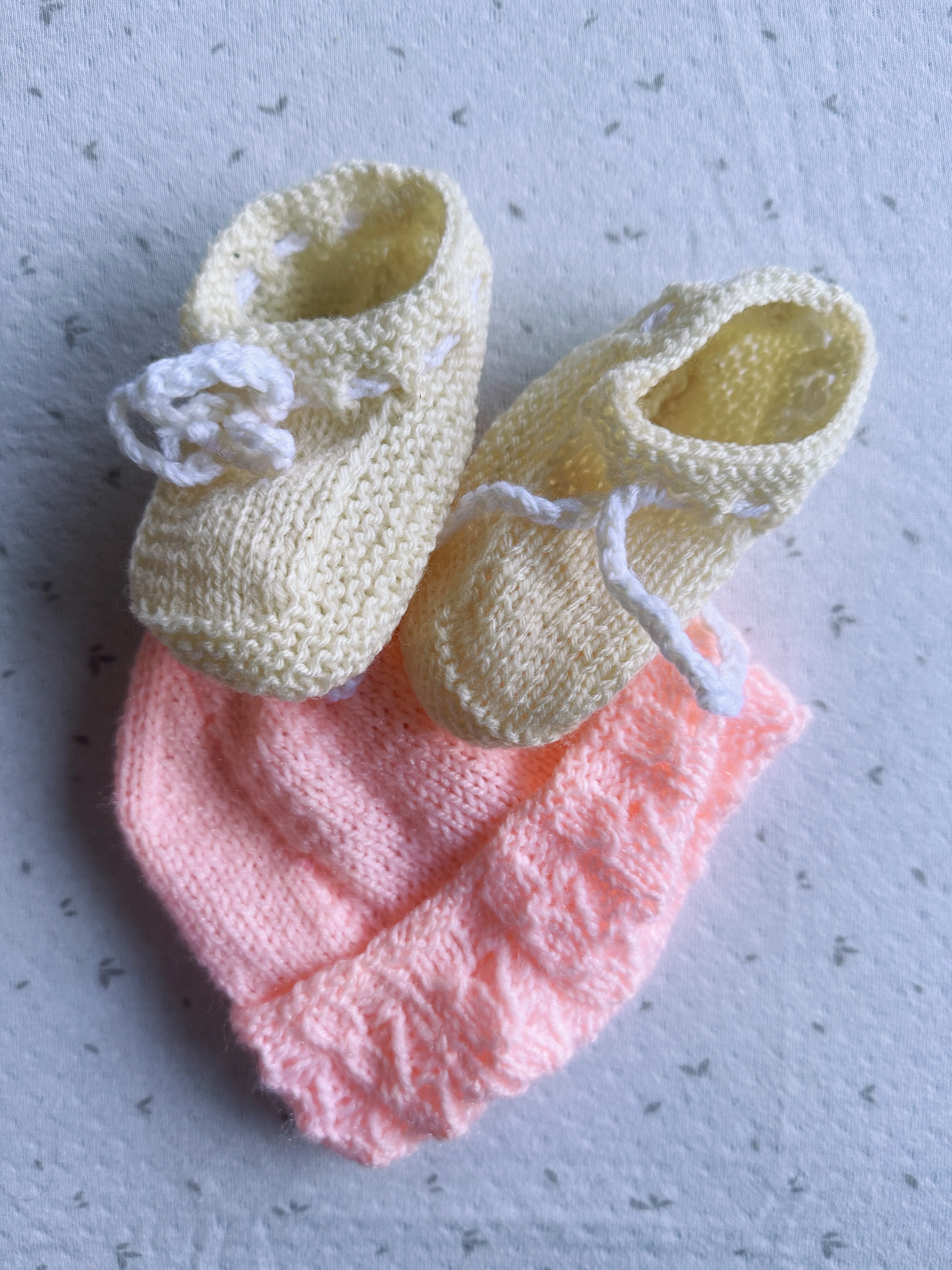
My daughter Aya was a few months old when a package arrived from South Africa, sent by my paternal aunt. Inside the box, filled with carefully chosen things for my child, was a small bag with a handwritten note: “Made by Ma.” Time slowed. I was ten years old again, sitting by the windowsill in her apartment, playing with my toy horses. I opened the bag slowly, and in my hands lay a pair of pale yellow baby booties and a baby pink beanie. They were in perfect condition, as though my grandmother had only just finished them and placed them in my hands herself.
The Maker
She was a slight woman with beautiful grey eyes, skin as pale and soft as clouds, and the scent of Olay moisturiser. My Ma, as I called her, found joy in knitting, embroidery and sewing. Her delicate hands wove treasures, and her love language was gifting booties, beanies, blankets and the most exquisite hand-embroidered dresses for the newborns of family and friends. Between prayers, cooking and caring for us, she spent her time with needles and yarn in hand, the radio playing, lost in her buttery-soft world. I wonder what she thought about.
Learning Her Craft
At her home, my cousin and I each had our own bag of knitting supplies. Mine was a red knitted bag (which I’m sure she made herself) that sat on the floor beside her bed. With my long dark hair freshly braided by her, I would sit as she taught me, holding my hands in hers and guiding the needle through the loops, talking me through each step. These moments are etched into my memory. More than knitting, I loved embroidery. I wasn’t very good at it, but my scruffy attempts were always met with praise. This is how we passed our time, in quiet, intimate moments in her world.
What I remember most is not the technical process but the feeling of being taught with a patience I have only ever associated with my grandmother.
The Lives of Ordinary Things
My fascination with the lives of objects, with memory and material culture, began as soon as I was old enough to open her wooden wardrobes and curious enough to want to know every detail about what was inside. Opening them became an almost sacred act, a threshold into a world that belonged to another time, with a history I was only slowly beginning to understand.
I handled her belongings with the utmost care and reverence, as though they were alive. There was jewellery, little engraved tin cases holding trinkets, handkerchiefs with embroidered initials, medicine bottles from the 1970s. I played with things my father had played with when he was little. Of all her possessions, my favourites were the records, the record player, the family photo albums and a miniature Coca-Cola bottle set from the 1970s. I asked her endless questions. I was fascinated not only by what these things were, but by the fact that they had survived, that someone had held them, used them, loved them and eventually put them away.
Looking back, I realise those afternoons were perhaps my earliest encounters with material culture. Long before I had the language to describe it, I understood that objects could be more than the sum of their materials or their practical uses. They could hold memory, preserve fragments of lives and create a tangible connection to people and times. Those wardrobes were small, private archives of a family’s life.
What Was Left Behind
My grandmother passed away when I was 21. It was my first taste of the bitterness of death. My childhood was intertwined with hers, and when she died, it felt as though she had taken the last piece of childhood I so desperately wanted to keep. I wasn’t ready to let go. I sat in her home after she had gone and looked at the cupboards that had been treasure troves to me as a child, the ones that carried me into a world I did not know but was privileged enough to learn. I looked at the shelves that held all the little crafts we had made together, and I wondered what would happen to it all, and what new meanings these things would acquire on their next journey.
Kept
I know my aunty has safely stored my grandmother’s cherished knitted items alongside her other precious belongings, and I can’t think of a better place for them to have found their second home. I can imagine her, in the rawness of her grief, gathering them up and tucking them somewhere safe like a a small box, perhaps, or a cupboard in her home where they would be protected.
My grandmother’s skills were passed down to my aunty. She taught her well, and this was evident when my aunty gifted Aya a little embroidered dress of her own. The skills my grandmother taught, the traditions she passed on and the love expressed through these handmade gifts live on through the people she left behind. This is what makes these objects so precious. They are not simply things that were kept and stored away. They are evidence of a love that keeps finding new ways to express itself.
Worn
Seeing those tiny booties on my daughter’s feet, made by her great-grandmother, who I know would have adored her, was a feeling I can’t quite describe. I was caught between two emotions: the warmth and nostalgia of my childhood, and the fierce love I have always associated with my grandmother. I often wonder whether my aunty understood just how much I needed that moment.
Very soon, Aya will outgrow her booties. I will wrap them carefully in the softest tissue and put them away in a box, as my aunty did before me. Perhaps, years from now, Aya will hold them in her own hands and wonder about the woman who knitted them, the woman who kept them, and the woman who placed them on her feet. Her great-grandmother will not be there to tell her story, but the booties and beanie will remain, carrying a little piece of her.
Leave a Reply