
Before I arrived in Istanbul, wars belonged to newspapers and television. Afterwards, they belonged to people I loved.
I have never been afraid of arriving in a city alone, and Istanbul was no exception. If anything, it felt easier. I already had people waiting for me on the other side.
The only difference this time was that I arrived carrying my own grief. I had left South Africa after my family endured a difficult chapter that changed everything I thought I knew about home. One day, when I am ready, I will write that story. This is not that story.
This is about the people who found me afterwards.
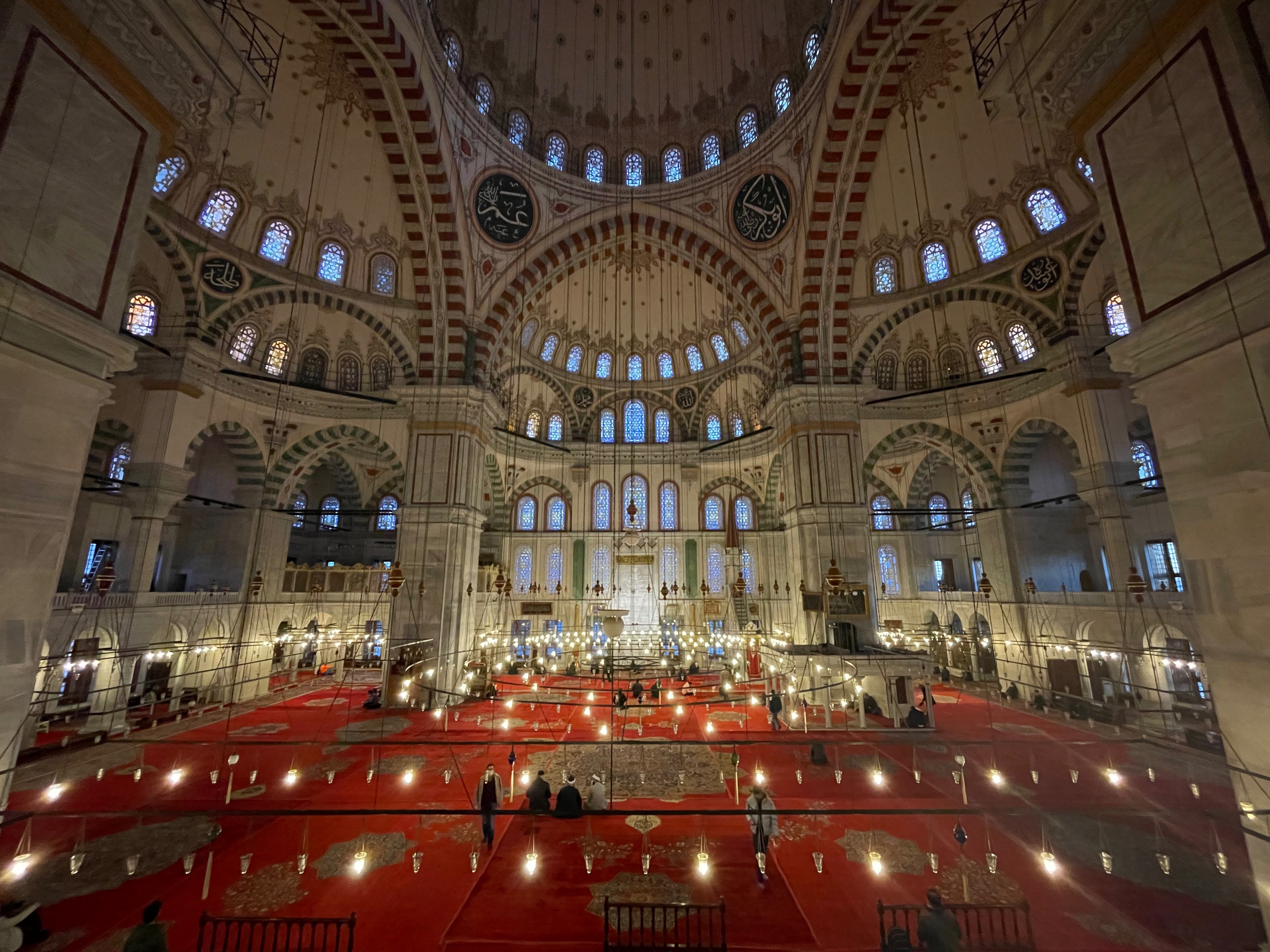
I rented an apartment in Fatih, it was old but had beautiful light and lots of windows. It was about a ten minute walk to the Fatih Cami. At the time, neighbourhoods around Akşemsettin Street had become home to thousands of Syrians rebuilding their lives in Istanbul. Arabic drifted through the streets, and the air smelled of cardamom coffee and freshly baked bread.


When I first arrived, I knew very little about the people who had settled there. Like many people who had only encountered Syria through the news, I understood the war through headlines, photographs, and statistics. I did not yet understand what it meant to lose a home, rebuild a life, or carry memories of a place that no longer existed as you remembered it.
Then I made friends.
Some had survived siege and starvation. Others had left everything behind with only what they could carry. Some still had parents, siblings, or friends living across closed borders. Others did not know if they would ever return home and spoke about it with a longing I had never encountered before.
But those were never the first things I noticed about them.
What I noticed was how easily they made room for people.
When I first arrived, I didn’t even have a Turkish bank card. One of my friends handed me theirs without hesitation and told me to use it whenever I needed to. Looking back now, I still can’t quite believe someone would place that much trust in a person they had only recently met. At the time, it simply felt normal. That was the kind of generosity I came to know in Fatih.
There was another friend whose apartment became a refuge of its own in Eyup Sultan. She would make coffee, we would get out our cigarettes and would spend entire evenings talking until neither of us realised how late it had become. She would always insist on giving me her bedroom. She had one single window that overlooked Eyup. There was always coffee, always something to eat, and a lot of laughter.

On weekends, I would sometimes travel by ferry to Yalova to stay with another family. I would put on comfy clothes, play with her daughter, and in the evenings we would settle down with all our snacks and end up sleeping well after midnight. Their home reminded me so much of family life in South Africa that, for a little while, I forgot how homesick I was. It never felt like I was visiting friends. It felt like I was spending the weekend with family.
One friend and I would escape the city and spend hours walking through Belgrad Forest. We always seemed to return to the same conversations: war, justice, and philosophy. For my birthday, he gave me a copy of The Epic of Gilgamesh and a handmade scroll with a passage about friendship. I still have it. Of all the gifts I received in Istanbul, it remains one of the most meaningful.

Some friendships become part of your life before you even realise it.
One of those friendships was with someone from Gaza.
We would meet and speak about history, politics, Palestine and the occupation, South Africa, and all the ways life had brought us to the same city. We never compared our lives, but there were moments when we recognised familiar threads in each other’s stories.
Whenever we met, he greeted me with a handshake. I used to tease him about how formal he was, but he never stopped. Somehow, it became a thing.
He would often come to the apartment my mother and I later shared. We’d drink coffee, eat dinner together, and talk long into the evening. More often than not, I was the one doing the talking. I had a habit of arriving with every worry and frustration I’d been carrying. He found me endlessly entertaining. He would laugh at me, very patiently listen, and by the time we said goodbye, whatever had felt so overwhelming no longer seemed quite so heavy. He made me happy.
A few Years later, when cancer had taken so much from him, I went to visit him in hospital.
One of the last things he said to me was, “You are like sunshine.”
I have carried those words with me ever since.
Looking back now, I realise that my favourite memories of Istanbul are not really tied to places at all. They belong to people.
They never introduced themselves through tragedy. They introduced themselves through kindness.
Without realising it, they nurtured me back into existence.
The gardens and courtyards of Fatih Mosque witnessed many of my hardest days. They witnessed tears I could not explain and the lump in my throat I couldn’t seem to get rid of. Looking back now, I realise that the same place also witnessed something else. It witnessed friendship quietly stitching me back together.

It was through those ordinary moments that I began to understand something extraordinary.
I learned that sabr, patience, was not simply a word I heard in conversations. It was something I watched people practice every day. It appeared in the way they accepted uncertainty without surrendering hope, in the way they welcomed guests despite having very little, and in the confidence that tomorrow would arrive exactly as Allah intended.
I lived alongside people whose faith shaped the rhythm of their everyday lives.
My own problems did not disappear. My grief remained real, raw, and anxiety still found me late at night. But slowly, almost without noticing, I stopped allowing small inconveniences to consume me. I learned to distinguish between discomfort and hardship. I discovered that joy could exist beside sorrow, and that laughter did not betray grief. Sometimes the two belonged together.
That may be the greatest gift my friends gave me.

Over the years, I also learned what it meant to say goodbye.
One by one, many of the people I loved left Istanbul. Some found opportunities elsewhere. Others risked dangerous journeys across the Aegean Sea, hoping to reach Greece and begin again in Europe. Each farewell carried the weight of uncertainty.
Friendship taught me far more than headlines ever could.
It taught me that history is not something confined to books or museums. Sometimes history sits across from you over a small cup of coffee. Sometimes it laughs loudly, insists you eat another plate of mloukhiyeh, asks about your family, and quietly carries memories too painful to put into words.
When I think of Istanbul now, I do not first remember its skyline, the seagulls, or the Bosphorus.
I remember the people.
The friends who, while carrying burdens far heavier than my own, somehow found the generosity to carry me too.
In recent years, many of the friends I once walked beside in Fatih have finally made their way home. After years of exile, uncertainty, and waiting, they have returned to Syria.
Their joy has become my joy.
When I think back to those afternoons in Istanbul, the tea, shared meals, conversations, laughter, long walks, weekends in Yalova, and coffee that was never served only once, I understand those years differently now. They were years of ṣabr jamīl, beautiful patience. The patience of continuing to hope, to love, to welcome others, and to believe that one day Allah would open a door.
Many of those doors have finally opened.
Few things have made me happier than seeing the people I love return to the place they never stopped calling home.
here
are not taking enough width on desktop view keep them a a straight alignment and refine this code
Leave a Reply